The Hidden Costs of Owning a Home in Westchester County

What Buyers Need to Know Before Making the Move
If you're thinking about buying a home in Westchester County, you're probably already looking at the purchase price, mortgage payment and property taxes.
But those numbers don't tell you everything it will cost to own the home.
I'm John Buoninfante, a Licensed Associate Real Estate Broker with Real Broker NY LLC. I move people in and out of Westchester, and one of the things I want buyers to understand is the difference between being able to buy a home and being comfortable with the complete cost of owning it.
Some expenses are predictable every month. Others depend on the particular property. And some show up shortly after you move in.
Here are the costs I would look at before deciding what a Westchester home really costs you.
1. Property Taxes
Property taxes are an obvious expense in Westchester, but the part buyers can miss is how property-specific they are.
There isn't one simple Westchester property-tax rate you can apply to the purchase price. Depending on the address, a property can be subject to county, town or city, village, school and special-district taxes. Assessments and exemptions matter too.
That means two similarly priced homes can have different tax bills.
The seller's current tax bill is useful, but don't automatically assume it tells you exactly what you'll pay. Review the property's actual assessment, current tax bills, applicable taxing jurisdictions and exemptions.
If something is unclear, I call the appropriate municipal assessor's office directly on behalf of my clients so we have better property-specific information before they make a decision. That doesn't guarantee what a future tax bill will be, but it gives us more useful information than an assumption.
I go into this in more detail in my guide to Westchester property taxes, but the main point here is simple: when you're comparing homes, compare the actual taxes on the properties you're considering rather than estimating them from the asking price.
2. Maintenance and Repairs
The condition of the house matters just as much as its price when you're thinking about future ownership costs.
A roof, heating or cooling system, plumbing, electrical system, foundation, driveway and other components all have their own condition and remaining useful life. A house that needs very little immediately can present a different ownership budget from a similarly priced house with several major items approaching replacement.
Routine maintenance matters too. Gutters need cleaning, exterior components need upkeep, mechanical systems need service, and components eventually need repair or replacement.
I wouldn't use one generic percentage and assume that's what every Westchester house will cost to maintain. I'd rather look at the actual property, the inspection, the age and condition of its major systems, and what may need attention in the first few years.
That gives you a more useful number than a rule of thumb.
3. Heating, Electricity, Water and Other Utilities
Utility costs can change considerably from one property to another.
The size of the house, heating system, insulation, energy efficiency and your own usage all affect what you'll spend. A buyer moving from an apartment into a single-family home also needs to remember that some expenses that were previously included in rent or building charges may become direct household bills.
Before buying, find out which utilities serve the property and ask for available information about its current operating costs.
The goal isn't to predict every future utility bill. It's to avoid building your budget around the mortgage and taxes while forgetting the cost of actually operating the house.
4. Commuting and Transportation
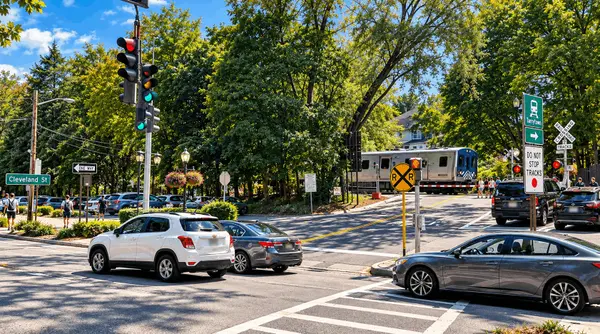
If you're moving to Westchester and commuting into New York City, transportation belongs in your housing budget.
For a Metro-North commuter, that can include the train fare and the cost of getting to and from the station. Check current fares and schedules at mta.info rather than relying on a general estimate. Depending on the station and your routine, parking may be another consideration.
If you'll be driving regularly, your transportation costs are different.
This is why I wouldn't evaluate a house based only on how many minutes it is from Manhattan or how close it looks to a train station on a map. Think through your actual routine: how you'll get to the station, whether you'll need parking, how often you'll commute and what transportation you'll use on the days you aren't taking the train.
A commute is both a time decision and a cost decision.
5. Lawn, Trees, Snow and Exterior Maintenance
A single-family home can come with exterior responsibilities that buyers coming from apartments, condos or co-ops haven't had to budget for directly before.
Depending on the property, those costs can include lawn care, tree maintenance, leaf cleanup, gutter cleaning, snow removal and upkeep of driveways, decks or other exterior areas.
You may decide to handle some of that yourself. You may hire someone. Either way, the property itself determines what needs to be maintained.
This is another reason two homes at the same price can have very different ownership costs. The house isn't the only thing you're maintaining. You're taking responsibility for the property around it too.
6. Homeowners Insurance
Homeowners insurance is another part of the carrying cost that should be evaluated for the specific property.
The premium can depend on the home and the coverage being purchased, so this isn't something I'd estimate from the purchase price alone.
If you're seriously considering a home, get an insurance quote early enough that the premium and any property-specific insurance issues can be included in your affordability calculation.
The important number is the complete cost of owning that particular property, not an assumed insurance number.
7. Property-Type Costs
The type of home you're buying can create another recurring expense.
A condo may have common charges. A co-op may have maintenance charges. Those costs are structured differently from the expenses of owning a single-family home, so they need to be included when you're comparing properties.
Don't compare two homes based only on purchase price and property taxes if one of them carries an additional recurring building or association charge.
The useful comparison is what each property will actually cost you to own each month.
8. Immediate Work After Closing
Not every expense after closing is a repair.
You may buy a house that's completely functional and still decide to paint, replace flooring, change light fixtures, update landscaping or make other improvements after moving in. Those aren't necessarily problems with the house. They're choices, but they still require money.
That's why I like separating required work from wanted work when looking at a property.
If the inspection identifies something that needs attention, that's one category. If you simply don't like the kitchen color or want different flooring, that's another.
Keeping those categories separate makes it easier to decide what actually needs to be done now and what can wait.
9. Moving In and Setting Up a House
There are also one-time expenses that don't show up in the listing.
Moving costs are one. Depending on what you already own and what the property requires, you may also need furniture, window treatments, outdoor equipment, tools or other items you didn't need in your previous home.
Individually, those purchases may not change a buying decision. Together, they can make the first several months of ownership more expensive than the monthly mortgage calculation suggests.
If you're moving from an apartment into a house, it's worth keeping some room in the budget for the transition instead of assuming every available dollar can go toward the purchase itself.
Look at the Complete Monthly Cost, Not Just the Purchase Price
This is really the point of the entire article.
Two Westchester homes with similar prices can create different financial obligations once you look beyond the asking price.
For each property you're seriously considering, I would look at:
- Mortgage principal and interest
- Property taxes
- Homeowners insurance
- Utilities
- Transportation and commuting
- Routine property maintenance
- Known repairs or replacements
- Condo common charges or co-op maintenance, when applicable
Then I'd separately account for the one-time expenses you expect after closing.
That gives you a much clearer picture of whether a particular home works for your budget.
A Home Inspection Helps Identify Property-Specific Costs
A home inspection can't tell you exactly what you'll spend over the next ten years, but it can help you understand the condition of the property you're buying.
When a major component is older or needs attention, that belongs in the financial conversation.
The useful question isn't simply, "Can I afford the purchase price?"
It's also, "What am I taking responsibility for when I own this property?"
That question becomes especially important when you're comparing two homes that look similar on price but differ substantially in condition, systems, property size or ongoing expenses.
Frequently Asked Questions About the Cost of Owning a Home in Westchester
What costs should I budget for besides my mortgage and property taxes?
Homeowners should also consider insurance, utilities, routine maintenance, transportation, exterior upkeep and property-specific repairs or replacements. Depending on the property type, condo common charges or co-op maintenance may also apply. Buyers should separate these recurring ownership expenses from one-time move-in or improvement costs.
How much should I budget for home maintenance in Westchester?
There isn't one percentage that accurately predicts maintenance costs for every Westchester home. The more useful approach is to evaluate the particular property's condition, major systems, inspection findings and exterior maintenance needs and build your reserve around the home you're actually buying.
Can two similarly priced Westchester homes have very different monthly costs?
Yes. Two similarly priced properties can have different tax bills, insurance costs, utility needs, maintenance requirements, transportation costs and, depending on the property type, common charges or maintenance fees. Purchase price alone doesn't show the complete carrying cost.
Should I use the seller's current property-tax bill when calculating affordability?
Use it as part of your research, but don't automatically assume the seller's current tax situation will be identical to yours. Review the property's assessment, actual tax bills, taxing jurisdictions and exemptions. When necessary, property-specific assessment questions should be clarified with the appropriate municipal assessor.
How should I compare the real cost of two Westchester homes?
Compare the complete carrying costs of the actual properties. Start with mortgage principal and interest, taxes and insurance, then add utilities, commuting, routine maintenance and any property-specific recurring expenses you already know about. Separately account for immediate repairs, improvements and move-in costs.
Can a Westchester real estate agent help me evaluate these costs before I make an offer?
A real estate agent can help identify the property-specific information that should be investigated, including taxes, known property information and questions that need to be addressed during due diligence. Some costs, including insurance, inspection findings, contractor estimates and future utility usage, require information from the appropriate professionals or providers.
The Bottom Line
The hidden costs of owning a home in Westchester aren't one mysterious extra bill.
They're the expenses that are easy to overlook when most of your attention is on the purchase price, mortgage and property taxes.
Before deciding what you're comfortable spending, look at the complete picture: taxes, insurance, utilities, transportation, maintenance, the condition of the property, any property-type charges and the work you expect to do after closing.
If you're still learning Westchester and trying to understand what moving here would actually involve, the Moving to Westchester County Guide is a good place to start.
If you're already looking at a specific Westchester home, send me the property address. We can look at the property-specific information that's available and identify the questions you should answer before making a decision.
Moving to Westchester County Guide:
https://johnbuoninfante137.lpages.co/westchester-guide/
John Buoninfante
Licensed Associate Real Estate Broker
Real Broker NY LLC
646-391-1093
John@JohnWestchesterRealtor.com
johnwestchesterrealtor.com
Categories
Recent Posts