Living in Hastings-on-Hudson NY: A Complete Guide for Home Buyers
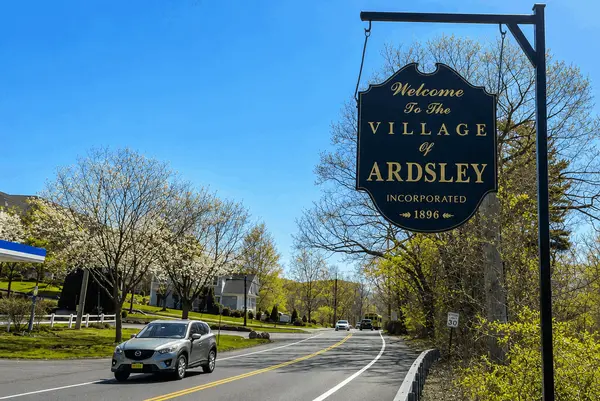
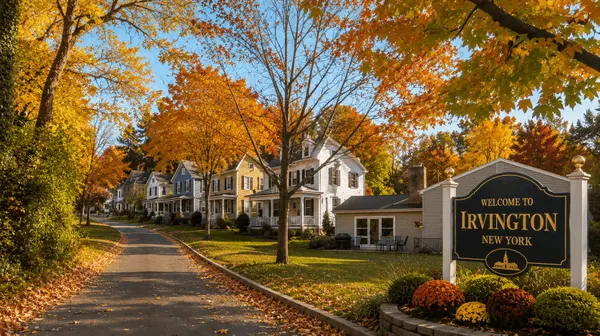
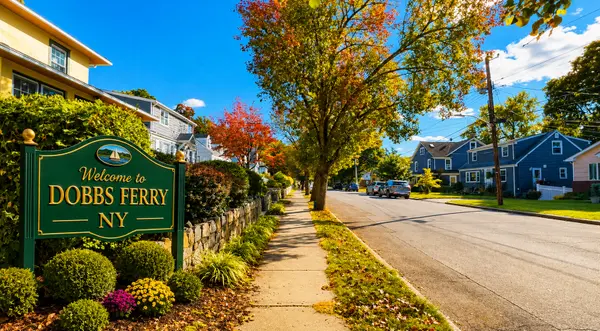
Here's the thing about living in Hastings-on-Hudson NY that takes most buyers a few visits to actually understand: it's not really competing with Dobbs Ferry or Irvington for the same buyer. It's doing something a little different.
Hastings-on-Hudson sits at the southern end of the Westchester County Rivertowns, which means two things in practice. First, it's the closest of the river villages to Yonkers and New York City, so the Metro-North commute to NYC tends to work out a little better here than it does from towns further up the line. Second, once you're living in Hastings-on-Hudson, the rest of the Hudson River towns stop feeling like separate places you have to drive to. The Old Croton Aqueduct Trail runs straight through the village and connects, on foot, all the way north through Dobbs Ferry, Irvington, and Tarrytown. Moving to Hastings-on-Hudson NY isn't just buying into one village. It's buying into the Rivertowns as a whole, with Hastings as your front door.
That's the pitch. Now here's what you actually need to know before you act on it.
Where Hastings-on-Hudson Sits
Hastings-on-Hudson is a village in the Town of Greenburgh, on the eastern shore of the Hudson River in lower Westchester County, about 20 miles north of Midtown Manhattan. Dobbs Ferry sits just to the north, Yonkers to the south, and unincorporated Greenburgh to the east. As of the 2020 U.S. Census, the village had a population of 8,590 residents.
What's easy to miss from the map alone is the topography. Hastings is hilly in a way that some of its Rivertown neighbors aren't quite as much — the village center sits up on a bluff above the river, and a lot of the housing stock climbs the hillside from there. That brings real Hudson River views to homes that aren't directly on the waterfront, but it also means some streets involve a genuine climb on the walk back from downtown or the train. That trade — hills for views — is part of what living in Hastings-on-Hudson NY actually feels like day to day, and it's worth knowing before you start touring.
The Old Croton Aqueduct Runs Through the Village
Most people researching Hudson River towns in New York eventually hear about the Old Croton Aqueduct Trail. Fewer realize how directly it runs through Hastings-on-Hudson specifically. The Aqueduct was completed in 1842 to carry New York City's first clean water supply from the Croton River, and it was designated a National Historic Landmark in 1992. Today the trail runs along its original path for roughly 26 miles through Westchester, and in Hastings it isn't a detour you drive to — it's part of the neighborhood. Walk the trail south and it connects you on foot toward Dobbs Ferry's Keeper's House visitor center, and north toward Irvington and the historic estates along the river.
This is one of the clearest physical expressions of what makes Hastings-on-Hudson different inside the Rivertowns corridor: the trail is the literal connective tissue between this village and its neighbors, which is part of why so many buyers comparing Dobbs Ferry vs. Hastings-on-Hudson or Irvington vs. Hastings-on-Hudson end up realizing the choice matters less than they expected.
Quarry Park Is a Better Story Than Most Buyers Realize
If you only know one thing about Hastings-on-Hudson beyond the river, it's probably the Aqueduct. The second thing should be Quarry Park. The site was a working marble quarry from 1828 to 1871 — Hastings marble was shipped as far as Charleston, South Carolina, and used in landmark buildings including the Marble Collegiate Church in Manhattan. After the quarry closed, a local resident bought the abandoned site in 1936 and spent years transforming it into a private park with marble cliffs, a lake, and gardens. The village later used the site as a dump from 1964 to 2002. After two decades of community organizing, it reopened as a public park in 2024, with marble cliffs, native plantings, and trails connecting to the Aqueduct and the waterfront.
This says something honest about Hastings-on-Hudson: the village has spent real effort and real years turning its industrial leftovers into some of the best public parks in Hastings-on-Hudson. That pattern shows up more than once here.
The Waterfront and Downtown
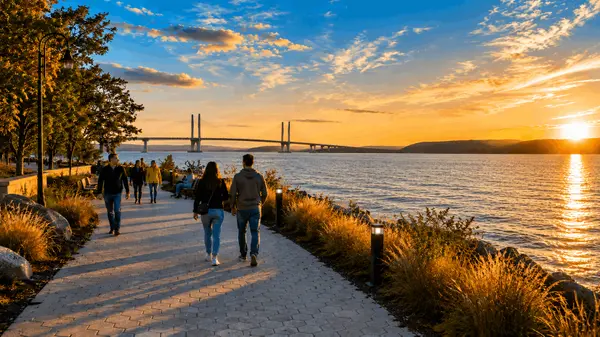
Unlike Dobbs Ferry or Tarrytown, the Hastings-on-Hudson waterfront has stayed less developed, and there's a specific reason for that. The riverfront here was industrial for over a century — marble shipping in the 1800s, then manufacturing into the 20th century. That history left environmental considerations that have slowed redevelopment, and it shows in the waterfront's character today: less retail and restaurant density directly on the water than you'll find in Dobbs Ferry, more open space and quieter river access. MacEachron Waterfront Park is the main public access point, with views of the Palisades and, on clear days, Manhattan.
Whether that reads as a pro or a con depends entirely on what you're looking for. Buyers focused on an active waterfront promenade with restaurants steps from the water often gravitate toward Dobbs Ferry's riverfront or Tarrytown's downtown. Buyers who want quieter river access, walkability to a smaller downtown of local shops and restaurants, and don't mind driving or walking a few minutes further for a livelier night out tend to be happy in Hastings-on-Hudson.
Things to Do in Hastings-on-Hudson
Beyond the Aqueduct trail and Quarry Park, day-to-day life in Hastings-on-Hudson centers on a walkable downtown along Warburton Avenue and Main Street, MacEachron Waterfront Park for river access, and a community calendar built around the village's parks and recreation programs. It's a smaller commercial center than Dobbs Ferry or Tarrytown, which fits the village's overall character: less built up, more residential, more centered on the outdoors and the river than on a dense restaurant row.
Getting Into the City
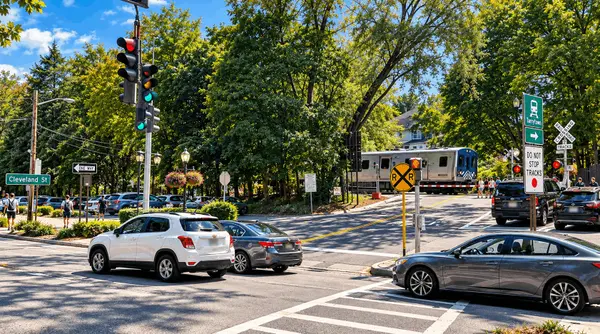
Hastings-on-Hudson has its own stop on the Metro-North Hudson Line, with direct service to Grand Central Terminal. Commute times generally run in the 33 to 40 minute range depending on the train, which puts the Grand Central commute from Hastings-on-Hudson among the more convenient of the Rivertowns, partly because of how far south the village sits in the corridor.
The one thing worth saying plainly: getting to the station from a hillside home can mean a real walk, and not a flat one. It's not a dealbreaker for most buyers, but it's the kind of detail you want to know walking in rather than discovering after you've moved.
Hastings-on-Hudson Housing Market: What the Numbers Actually Show
Here's where the numbers matter more than the adjectives. According to OneKey® MLS data for Hastings-on-Hudson single-family homes, the median sales price over the trailing 12 months through May 2026 was $1,395,000, up 16.3% from the same period a year earlier. Homes are also moving faster: the median days on market fell from 40 to 28 over that span, and sellers are receiving a median of 109% of original list price — a clear sign of a competitive, seller-favorable Hastings-on-Hudson real estate market. Inventory has stayed extremely tight, holding at 7 single-family homes for sale.
Condo and co-op activity in Hastings-on-Hudson is minimal by comparison — both categories see only a handful of closed sales in a typical 12-month period, which makes the percentage swings in median price in those segments more a function of small sample size than a real market trend. If you're specifically looking at Hastings-on-Hudson homes for sale in the condo or co-op category, it's worth talking through actual current listings rather than relying on any single statistic.
Hastings-on-Hudson Property Taxes
I'll give you the honest version of this rather than a number that might be wrong by the time you read it. New York calculates property taxes the same way everywhere: taxes owed equal your taxable assessment multiplied by the tax rate per $1,000, where the taxable assessment is your assessed value minus any exemptions, and the tax rate itself is set by dividing the taxing jurisdiction's levy by the total taxable assessments in that jurisdiction, per $1,000. That formula comes from New York State's own Department of Taxation and Finance.
What that formula doesn't give you is an actual dollar figure, because assessed values and tax rates are set locally — by the Village of Hastings-on-Hudson, the Town of Greenburgh, Westchester County, and the Hastings-on-Hudson school district, all of which show up as separate line items on your bill. In Westchester, it gets one layer more complicated: when a school district or other taxing jurisdiction crosses municipal lines, equalization rates come into play to keep the math fair across towns with different assessment practices, which is common in this part of the county.
Hastings-on-Hudson Schools
Hastings-on-Hudson is served by the Hastings-on-Hudson Union Free School District, which includes three schools: Hillside Elementary School, Farragut Middle School, and Hastings High School. According to GreatSchools.org, Hillside Elementary rates an 8 out of 10, while both Farragut Middle School and Hastings High School rate a 10 out of 10.
For many relocation buyers, especially families, school quality is one of the deciding factors that puts Hastings-on-Hudson on the shortlist in the first place, and it tends to show up directly in resale demand for homes in the district.
Who Hastings-on-Hudson Is Actually Right For
Hastings-on-Hudson tends to be the right fit for buyers who want walkable village living, a real relationship with the river and the Aqueduct trail, and a shorter Metro-North commute than some of the more northern Rivertowns offer, and who don't mind hills, a quieter waterfront, and a competitive, low-inventory market when they're ready to buy. It's less right for buyers who want a bustling waterfront restaurant scene at their doorstep or a large selection of homes to choose from at any given moment. Those buyers are often better served looking at Dobbs Ferry or Tarrytown, and I'll tell you that directly if that's what your goals actually call for.
The Bottom Line
Hastings-on-Hudson isn't trying to be the biggest or the busiest of the Westchester County Rivertowns. It's making a different argument: a real connection to the Hudson and the Aqueduct, a shorter ride into the city, a village that's slowly and deliberately turned its industrial past into some of its best public spaces, and a position in the Rivertowns chain that makes the rest of the corridor feel like an extension of your own neighborhood rather than someplace else you have to plan a trip to.
If you're weighing Hastings-on-Hudson against Dobbs Ferry, Irvington, Tarrytown, or Sleepy Hollow, that's exactly the kind of decision I help buyers and sellers work through every week. I'm John Buoninfante, a Westchester County Realtor, and I move people in and out of Westchester. If you want a direct comparison based on what you're actually trying to get out of your next move, reach out and let's talk through it.
Frequently Asked Questions
Is Hastings-on-Hudson a good place to live? Hastings-on-Hudson offers direct Metro-North access to Grand Central, a National Historic Landmark trail running through the village, a recently reopened public park built on a former marble quarry, and a quieter, less commercialized waterfront than some neighboring Rivertowns. Whether it's the right fit depends on whether you're looking for that combination specifically, since it trades a bigger downtown and waterfront restaurant scene for a smaller, quieter village center.
What is it like living in Hastings-on-Hudson? Day-to-day life centers on the Old Croton Aqueduct Trail, which runs through the village and connects on foot to neighboring Rivertowns, along with a walkable downtown, MacEachron Waterfront Park, and the village's hilly, bluff-top topography, which brings river views to homes set back from the water.
How long is the commute from Hastings-on-Hudson to New York City? Hastings-on-Hudson has its own Metro-North Hudson Line station with direct service to Grand Central Terminal. Commute times generally run between 33 and 40 minutes depending on the train.
What is the Hastings-on-Hudson housing market like right now? According to OneKey® MLS data, the median single-family home sales price in Hastings-on-Hudson over the trailing 12 months through May 2026 was $1,395,000, up 16.3% year over year, with homes selling in a median of 28 days and receiving 109% of original list price on average. Inventory remains very limited.
How are the schools in Hastings-on-Hudson? The Hastings-on-Hudson Union Free School District includes Hillside Elementary School, Farragut Middle School, and Hastings High School. According to GreatSchools.org, Hillside Elementary rates an 8 out of 10, and both Farragut Middle School and Hastings High School rate a 10 out of 10.
https://www.census.gov/quickfacts/fact/table/hastingsonhudsonvillagenewyork/PST045224
https://new.mta.info/schedules
https://parks.ny.gov/visit/state-parks/old-croton-aqueduct-state-historic-park
https://quarryparkhastings.org/history-of-quarry-park/
https://www.hohny.gov/Facilities/Facility/Details/Quarry-Park-9
https://www.greatschools.org/new-york/hastings_on_hudson/
https://www.tax.ny.gov/pit/property
https://www.onekeymls.com - OneKey® MLS, Local Market Update — Hastings-on-Hudson, May 2026
Categories
Recent Posts