Moving to Westchester County NY: Everything You Need to Know in 2026
If you're thinking about moving to Westchester County, deciding on Westchester is really only the beginning. The harder part is figuring out where in Westchester you should live.
White Plains can give you a very different experience from Scarsdale. Tarrytown doesn't feel like Rye. Dobbs Ferry isn't Pleasantville. And as you move farther north, what you can get for your budget, the amount of property, your commute and even your day-to-day routine can change quite a bit.
A lot of people relocating here start with a list of towns they've heard about and immediately start looking at houses. I think that's backwards.
Before we narrow down towns, I want to understand your budget, commute, property taxes, housing preferences and what you actually want your life here to look like. If schools are part of your decision, we also need to make sure you understand the school district serving any property you're considering.
I'm John Buoninfante, your Westchester Realtor, and I move people in and out of Westchester County. If you're considering moving to Westchester in 2026, here's what I think you should know before deciding where to live.
Where Is Westchester County?
Westchester County sits directly north of New York City, with the Bronx to the south and the Hudson River along its western side.
Being close to New York City is obviously a big reason people consider moving here, but don't think of Westchester as one giant suburb. It's made up of cities, towns, villages and hamlets, and there are very different ways to live here.
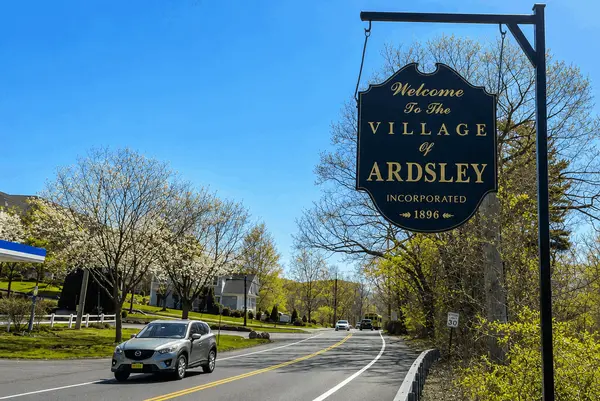
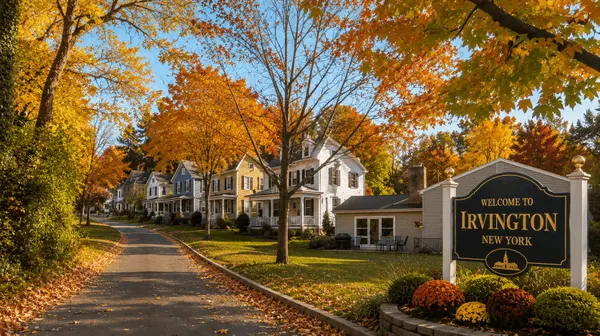
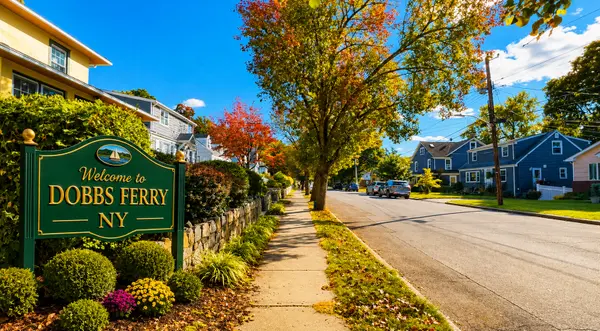
You can be in downtown White Plains surrounded by restaurants, shopping, apartments and condos. Along the Hudson River, you have communities like Tarrytown, Irvington and Dobbs Ferry. Scarsdale and Ardsley offer another type of residential setting.
Head over to the Sound Shore and you're looking at communities including Pelham, New Rochelle, Larchmont, Mamaroneck, Harrison and Rye. Farther north, you get into places like Pleasantville, Chappaqua, Briarcliff Manor, Croton-on-Hudson, Armonk, Bedford and Katonah.
That's one of the first things I try to explain to someone who doesn't know the county well. Deciding that you want to live in Westchester doesn't narrow things down nearly as much as you might think.
If You Commute to New York City, Start There
For a lot of people moving from New York City to Westchester, the commute is one of the first things we talk about.
Metro-North has three main lines serving Westchester. The Harlem Line serves communities including Bronxville, Scarsdale, White Plains, Pleasantville and Chappaqua. The Hudson Line runs through communities including Yonkers, Hastings-on-Hudson, Dobbs Ferry, Irvington, Tarrytown, Ossining and Croton-on-Hudson. The New Haven Line serves the eastern side of the county, including Pelham, New Rochelle, Larchmont, Mamaroneck, Harrison and Rye.
Current MTA Metro-North schedules show certain express trips from Scarsdale and White Plains reaching Grand Central in roughly the mid-30-minute range, while Tarrytown can be in the upper 30s on certain express trains. Those times vary by departure, service pattern, day and schedule, so you should always check the current MTA timetable for the trips you'd actually use.
More importantly, I wouldn't choose where to live based on the train time alone.
If the train takes 36 minutes but you're driving 12 minutes to the station, finding parking and then traveling another 20 minutes after you get to Grand Central, that's not really a 36-minute commute.
The location of the house makes a difference too. One property might be a ten-minute walk from Metro-North while another house in the same community requires you to drive.
That's why I want my buyers looking at the entire door-to-door commute rather than comparing towns based on a Metro-North schedule.
Source: MTA Metro-North Railroad schedules, accessed September 2026. Train times and service patterns are subject to change.
Don't Ask Me for the "Best Town in Westchester"
People ask me some version of this all the time: What's the best town in Westchester County? It's the wrong question to start with, because someone who wants to walk to Metro-North and go out to dinner without getting in the car may have a completely different list from someone who wants more property and doesn't care about living near downtown.
So instead of starting with a ranking, here's how I'd start narrowing things down.
If You Want Something More Urban
White Plains is one of the first places I'd look at.
It offers one of the more urban lifestyles you'll find in Westchester, with a real downtown, restaurants, shopping, apartments, condos and a major Metro-North station.
But don't assume White Plains means downtown living. There are also residential neighborhoods with single-family homes, so the experience can change considerably depending on where in White Plains you're looking.
If You Want a Hudson River Village
Tarrytown, Irvington, Dobbs Ferry and Hastings-on-Hudson are all worth exploring.
They're commonly grouped together as the Rivertowns, but once you spend some time in them, you'll see why I don't treat them as interchangeable.
Tarrytown has one of the larger downtowns in the group. Irvington has a smaller village center and historic housing. Dobbs Ferry has its own downtown and restaurant scene. Hastings-on-Hudson sits farther south and has a different housing and village layout.
This is one of those situations where looking at listings online only gets you so far. You really have to see the communities.
If You Want a More Residential Setting
Scarsdale, Ardsley and Edgemont may come into the conversation.
This is also where you need to pay close attention to municipal and school-district boundaries. A Scarsdale mailing address, for example, does not automatically mean a property is located within the Village of Scarsdale or served by the Scarsdale Union Free School District.
We verify the specific property rather than making assumptions from the mailing address.
If You're Looking Along the Sound Shore
Then we may be talking about Pelham, New Rochelle, Larchmont, Mamaroneck, Harrison or Rye.
These communities are on the eastern side of Westchester and generally orient you toward the New Haven Line rather than the Hudson or Harlem lines.
They're not variations of the same place. Housing, downtowns, lot sizes, train access and municipal structures vary, which is why I'd want you to compare the actual communities rather than choosing "the Sound Shore" as one category.
If You're Willing to Go Farther North
Pleasantville, Chappaqua, Briarcliff Manor, Ossining, Croton-on-Hudson, Armonk, Bedford and Katonah can open up another set of possibilities.
This is where the trade-offs sometimes start changing. Some buyers would accept a longer commute if they found a house or property that fit what they wanted better, and others wouldn't.
Knowing that before we start looking is much more useful than starting with somebody else's list of the best towns in Westchester.
How Much Does It Cost to Buy a Home in Westchester County?
A countywide median can give you a general sense of the market, but it can't tell you what the home you want is going to cost.
According to OneKey MLS, the median sale price for a single-family home in Westchester County was $1,060,000 for the 12 months through August 2026, up 9.3% from $970,000 during the previous comparable period.
That's useful context. But Westchester has far too much variation for me to take that number and apply it directly to an individual buyer.
Prices can vary based on municipality, school district, neighborhood, property type, lot, condition, proximity to transportation and the house itself.
So if you tell me you have a $900,000 budget or a $1.5 million budget, I'm much more interested in showing you what that money is actually buying in the communities you're considering.
That's the information you can make a decision with.
What Is the Westchester Housing Market Like in 2026?
If you're planning to buy a single-family home in Westchester, you should be prepared for competition when the right property comes on the market.
In August 2026, OneKey MLS reported 297 new single-family listings in Westchester County, down 15.6% from August 2025. Inventory declined from 906 homes to 774, while the median sale price reached $1,205,000, up 9.5% from the previous August. Sellers received an average of 105.7% of their original asking price.
I wouldn't make a buying decision from one month of data, though.
Over the 12 months through August 2026, there were 4,586 single-family closed sales compared with 4,576 during the previous comparable period, so sales were essentially flat. During the same period, the median sale price increased 9.3%, median days on market fell from 41 to 37 and inventory declined 4.4%.
For a buyer, the lack of a meaningful increase in available single-family inventory is something I'd pay attention to.
Even then, countywide numbers only take us so far. A buyer with $1 million looking in one community can face a very different market from a buyer with the same budget somewhere else in Westchester.
Once we narrow down where you're looking, I want to see recent sales and current inventory in those communities and at your price point.
Source: OneKey MLS Local Market Update, Westchester County Single-Family Homes, August 2026.
Westchester Isn't Just Single-Family Homes
A lot of people picture a detached house and yard when they think about leaving New York City for Westchester.
That's certainly one option, but it isn't the only one.
Depending on where you're looking, you'll find single-family homes, condos, co-ops, townhouses, multifamily properties, historic homes, newer construction, luxury properties and apartments close to downtowns and Metro-North.
That can be especially important if you want to leave the city but aren't necessarily looking for all the maintenance that can come with owning a house and property.
The market also behaves differently by property type. According to OneKey MLS, the median Westchester condo sale price for the 12 months through August 2026 was $550,000, while the co-op median was $240,000.
They're different property types, with different ownership structures, locations, sizes and monthly costs, so I wouldn't call one automatically the better value.
You may have more housing options in Westchester than you initially thought.
Property Taxes Can Change What You Can Afford
This is something I want buyers paying attention to early, not after they fall in love with a house.
Property taxes can be a substantial part of the cost of owning a home in Westchester, and two houses with similar asking prices can have very different tax bills.
That's why I want to compare the total monthly housing cost rather than looking only at purchase price.
I also don't automatically assume the current tax bill tells us everything we need to know. Assessments, exemptions, municipalities and school districts can all matter.
Once one of my buyers is seriously considering a property, I'll investigate the tax situation and, when appropriate, contact the municipal assessor's office directly.
I'd much rather ask those questions before you buy than discover something afterward that could have affected your decision.
School Districts Can Be More Complicated Than the Town Name
If schools are part of your decision, don't rely on the mailing address alone.
Municipal boundaries, postal addresses and school-district boundaries don't always line up neatly in Westchester. We need to verify the district serving the specific property you're considering.
From there, you can review objective information from the school district itself, the New York State Education Department and other sources that matter to you.
I can help identify the school district serving a property and explain the geography. What I won't do is tell you which school or district is "best." That's a decision you should make based on your own priorities and the objective information available to you.
A Walkable Town Doesn't Necessarily Mean a Walkable House
This catches some relocating buyers by surprise.
You may hear that Tarrytown is walkable, or Dobbs Ferry, or Pleasantville. Their downtown areas can be. That doesn't mean every house in those communities is an easy walk to Metro-North, restaurants or shops.
White Plains is another good example because living downtown can be completely different from living in one of its residential neighborhoods.
Instead of asking me whether a town is walkable, tell me what you actually want to be able to walk to, whether that's Metro-North, restaurants, coffee, shopping or parks.
Then we can look at the location of the actual house and see whether it works for what you have in mind.
Do You Need a Car in Westchester?
For most people, having a car makes life in Westchester considerably easier. How dependent you are on one can vary quite a bit.
Someone living near downtown White Plains and Metro-North may use a car very differently from someone living on a larger property farther north.
You can even see that difference within the same community. One house may put you within walking distance of the train and dinner. Another property a few minutes away by car can make driving part of almost every daily errand.
Once again, the location of the house matters almost as much as the town.
Don't Choose the Town and Forget About the House
I've seen buyers become so focused on finding the "right" Westchester town that they start compromising on almost everything they originally wanted in a house.
Some of those trade-offs make sense depending on what matters most to you.
You may decide a smaller house is worth it because walking to Metro-North is more important. You may accept a longer commute because you want more property. You might be willing to renovate to get the location you want.
Or you may realize you'd rather change towns than spend the next five years renovating a house you never really liked.
Those are personal trade-offs, and I'd rather figure them out before you're standing in a house with an offer deadline.
Older Homes Are Part of the Westchester Market
You'll find plenty of older housing throughout Westchester, including in many established communities closer to New York City and along the Hudson.
For some buyers, the architecture and character are part of what attracts them to these homes.
But character and condition are two different things.
Roofing, electrical systems, plumbing, HVAC, drainage, foundation, previous renovations and environmental concerns can all become part of the due-diligence process depending on the property.
Two houses with the same asking price can turn into very different financial decisions once you understand their condition.
A qualified home inspector and, when appropriate, additional specialists should be part of that evaluation.
What Does Daily Life in Westchester Actually Look Like?
This can be hard to understand from listing photos and Google searches.
If you're moving from New York City, you may end up with more interior space, a yard, a more residential setting or easier access to parks and outdoor space.
Your responsibilities may change too.
You could have landscaping, snow removal, exterior maintenance, heating costs and more driving. Depending on where you live, you may no longer have a restaurant downstairs or a grocery store around the corner.
Living in Westchester is different from living in New York City, and I want my buyers to understand those differences before they make the move.
A Real Example of How I Help Someone Choose a Westchester Town
One of my recent clients is a good example of why I don't like telling somebody where they should live before I understand their situation.
She grew up in upstate New York but had been living in California, where she owned a home. She was moving back to New York for a healthcare position that involved both New York City and Westchester. Her budget was around $1.5 million, and commute distance was a major priority.
We first spoke during the last week of October 2025.
Instead of picking one town and spending the next six months waiting for a house there, we explored different parts of the county. During the search we looked at Rye, Rye Brook, Ardsley, Irvington, Scarsdale, Edgemont, Briarcliff Manor, Hastings-on-Hudson, Thornwood and Hawthorne.
That gave her a chance to compare the actual houses, locations and commute rather than trying to make the decision from a list she found online.
She ultimately bought in Hawthorne because the home, location and commute lined up with the priorities we had been working through during the search. She closed in May 2026.
That's what we're trying to figure out when you're relocating here.
The Biggest Mistakes I See Buyers Make When Moving to Westchester
A lot of mistakes start with making a decision too early.
I've seen buyers choose a town based mostly on its reputation, assume a mailing address tells them the school district, compare asking prices without paying enough attention to property taxes or think an entire community is walkable because it has a walkable downtown.
Another common mistake is comparing train times without looking at the complete door-to-door commute. Buyers can also get attached to one community before seeing what the same budget buys somewhere else, or decide what they can afford based on purchase price without considering the total monthly cost of owning the home.
You don't need to know everything about Westchester before you start looking.
You should know enough to understand why you're looking where you're looking.
Should You Rent in Westchester Before Buying?
Sometimes, if you've never spent meaningful time in Westchester, aren't sure about your commute or have no idea which part of the county works for what you need. Renting can give you time to learn the area in that situation.
But I don't think everybody relocating here automatically needs to rent first.
If your finances, timeline and priorities are clear, we can spend time comparing communities before you buy. The important thing is not rushing into a location simply because you don't know what your alternatives are.
A Better Way to Decide Where to Live in Westchester
When I'm helping somebody relocate, I usually start with the budget and the total monthly cost they're comfortable carrying, including property taxes and the other costs of ownership.
Then I want to understand the commute. Where are you going, how often are you going there and what does an acceptable door-to-door trip actually look like?
From there, we can talk about how you want to live. Maybe you want a downtown or a Hudson River setting. Maybe you prefer something more urban or more residential. You may want more property, or being able to walk to Metro-North may be much more important.
Then we get into the house itself, including how much space you need, whether you're willing to renovate, whether you'd consider a condo or are set on a single-family home, and how important the yard, garage, age and condition are to you.
Once I understand those things, a list of towns becomes much more useful.
That's very different from Googling "best places to live in Westchester County" and trying to fit yourself into somebody else's top-ten list.
So, Is Moving to Westchester County Worth It?
Whether moving to Westchester makes sense really depends on what you're hoping to change about where and how you live.
If you want to stay connected to New York City while changing the way you live, Westchester gives you a wide range of choices. But every choice comes with trade-offs.
A shorter commute may mean compromising somewhere else. More property may take you farther north. A walkable downtown can come with a different housing mix. The community you initially like the most may not be where your budget gets you the house you want.
Property taxes and the competitive single-family market also need to be part of the decision.
That's why I wouldn't tell someone, "Yes, you should move to Westchester," after a five-minute conversation.
I'd want to understand what you're trying to accomplish first, and help you find the part of Westchester that fits what you actually need, not whichever town somebody on the internet ranked number one.
Frequently Asked Questions About Moving to Westchester County
How much does a house cost in Westchester County in 2026?
According to OneKey MLS, the median single-family sale price was $1,060,000 for the 12 months through August 2026, up 9.3% from the previous comparable period.
I wouldn't anchor too heavily on that number. Prices vary significantly by community, property type and price range, so I'd want to look at what your budget is actually buying in the areas you're considering.
What are the best towns in Westchester County for someone moving from NYC?
There isn't one town that's best for everybody.
If you're looking for something more urban, White Plains may be worth exploring. If you're interested in a Hudson River village, Tarrytown, Irvington, Dobbs Ferry and Hastings-on-Hudson may come into the conversation. Along the Sound Shore, you have communities including Pelham, New Rochelle, Larchmont, Mamaroneck, Harrison and Rye.
Which communities you investigate should depend on your budget, commute, housing preferences and the characteristics you're looking for rather than a generic ranking.
How long is the commute from Westchester County to New York City?
It depends on the community, station, train and time of day.
Current MTA Metro-North schedules show certain express rides from Scarsdale, White Plains and Tarrytown reaching Grand Central in roughly the mid-to-upper 30-minute range, while other departures and local trains take longer.
Schedules and travel times can change, so check the current MTA timetable for the trips you would actually use.
I also recommend comparing the complete door-to-door commute rather than the train ride alone.
Can you live in Westchester County without a car?
It's possible in certain locations, particularly when you're close to Metro-North, downtown, shopping and other daily needs.
But even within communities that have walkable downtown areas, many residential locations are considerably easier to navigate with a car.
The answer depends heavily on the location of the particular property.
How do Westchester County school districts work?
School-district boundaries don't always match postal addresses or municipal boundaries in Westchester.
Before assuming anything based on the town name or mailing address, verify the school district serving the specific property.
Buyers can then review objective information directly from the district, the New York State Education Department and other sources important to their decision.
Are property taxes high in Westchester County?
Property taxes can represent a substantial portion of the cost of owning a home in Westchester, but the amount varies by property, municipality, school district, assessment and applicable exemptions.
Rather than relying on a generic countywide number, I look at the actual tax situation for the specific property with my buyers.
Should I rent before buying in Westchester?
It can make sense if you're unfamiliar with the county, uncertain about your commute or still trying to determine which areas work for what you need.
I don't think every relocation buyer needs to rent first, though. Spending time comparing communities before purchasing can help you make that decision without automatically adding a rental move first.
How do I decide where to live in Westchester County?
I'd start with your budget and total monthly housing cost, then look at your commute, how you want to live and what you need from the house itself.
Once those priorities are clear, comparing communities becomes much more useful because you're evaluating them against your own criteria rather than somebody else's ranking.
Who can help me figure out where to live in Westchester County?
That's a big part of what I do with relocation buyers. I'm John Buoninfante, a Westchester Realtor, and I help people compare communities, housing, commuting, property taxes and current market conditions before they decide where they want to focus their search. You can reach me at 646-391-1093 or buoninfanteteam@gmail.com.
Planning a Move to Westchester County?
I'm John Buoninfante, your Westchester Realtor, and I move people in and out of Westchester.
I work with people relocating from New York City, other states and overseas, and you don't need to know exactly where in Westchester you want to live before reaching out. Figuring that out is often one of the most important parts of the process.
I'd rather spend thirty minutes learning how you actually live, where you need to go, what you want in a house and what you're comfortable spending than sending you a generic list of homes.
If you're still researching, download my Moving to Westchester County Guide. It covers communities, commuting and some of the things you'll want to understand before buying here.
https://johnbuoninfante137.lpages.co/westchester-guide/
If you're further along and want help narrowing down communities or starting your search, reach out. We can talk through what you're looking for and start figuring out which parts of Westchester make sense based on your priorities.
John Buoninfante
Licensed Associate Real Estate Broker
Real Broker NY LLC
646-391-1093
buoninfanteteam@gmail.com
JohnWestchesterRealtor.com
Categories
Recent Posts