How Much Income Do You Need to Buy a Home in Westchester County NY? 2026 Guide
If you're planning to buy a home in Westchester County, one of the first questions you may have is pretty straightforward:
How much money do I actually need to make to buy here?
The frustrating answer is that there isn't one Westchester income number.
Two buyers earning exactly the same amount could have very different home-buying budgets based on their down payment, existing debt, interest rate, property taxes, insurance and other parts of their financial picture. And two Westchester homes with the exact same asking price can have noticeably different monthly costs.
I'm John Buoninfante, a Licensed Associate Real Estate Broker with Real Broker NY LLC. I move people in and out of Westchester, and this is one of the areas where I think buyers are better served by working backward from the monthly numbers rather than starting with a salary they found in an online affordability calculator.
Let's look at how that works.
There Isn't One Income You Need to Buy in Westchester
A better question than "How much do I need to earn?" is:
What purchase price and monthly housing cost make sense with my complete financial situation?
Mortgage lenders look at more than income when evaluating a borrower. Depending on the loan and underwriting method, factors can include qualifying income, existing monthly debt, credit profile, assets, reserves and the proposed housing expense.
Debt-to-income ratio, or DTI, compares monthly debt obligations with gross monthly qualifying income. Different mortgage programs have different limits — there isn't one number that determines whether every borrower qualifies. Per Fannie Mae's Selling Guide, Section B3-6-02, the maximum total DTI for manually underwritten loans is 36% of stable monthly income, which can be exceeded up to 45% if the borrower meets specific credit score and reserve requirements on Fannie Mae's Eligibility Matrix. For loan casefiles run through Fannie Mae's automated underwriting system, Desktop Underwriter, the maximum allowable DTI is 50%.
Those are underwriting limits, however — not a recommendation that a buyer spend to the maximum amount a lender will approve. The Consumer Financial Protection Bureau makes an important distinction here: the amount you qualify to borrow and the amount you can comfortably afford are not necessarily the same thing.
That's especially relevant in Westchester.
Underwriting limits and eligibility requirements are set by individual loan programs and can change. Confirm current guidelines and how they apply to your specific loan scenario with a licensed mortgage professional before relying on any figure in this guide.
Why Purchase Price Doesn't Tell You the Whole Story
Suppose you're considering two homes that are both listed at $900,000.
At first glance, you might assume the monthly cost should be approximately the same. Not necessarily. One property might have substantially different property taxes from the other. Homeowners insurance can differ. Your interest rate and down payment affect the mortgage payment. A condo or HOA may add monthly fees. A smaller down payment may also introduce mortgage insurance depending on the loan.
That's why I don't like evaluating a Westchester property using the purchase price alone.
Your total housing expense can include:
- Mortgage principal and interest
- Property taxes
- Homeowners insurance
- Mortgage insurance when applicable
- Condo or homeowners association charges when applicable
The CFPB refers to the four basic mortgage-payment components — principal, interest, taxes and insurance — as PITI.
When we're looking at homes, the actual property taxes are one of the numbers I want a buyer paying attention to early in the process rather than discovering their effect on the monthly cost after falling in love with a property.
What Would a $700,000 Westchester Purchase Look Like?
Rather than tell you that a $700,000 house requires a particular salary, let's look at what actually has to be calculated.
With 20% down, a $700,000 purchase would mean:
Purchase price: $700,000
Down payment: $140,000
Mortgage amount: $560,000
From there, we still need the mortgage rate, the actual property taxes on the specific home, homeowners insurance and information about your other monthly debt obligations before a lender can determine qualification.
Change any one of those numbers and the income calculation changes. Put 30% down instead of 20%, and you're financing less. Have a significant monthly car payment, student loan or other qualifying debt, and that affects your DTI. Look at another $700,000 property with different taxes, and the calculation changes again.
That's why I wouldn't tell someone, "You make $X, therefore you can afford a $700,000 home in Westchester." We need the rest of the picture.
What About a $1 Million Home?
The same principle becomes even more important as the purchase price increases.
With 20% down on a $1 million purchase:
Purchase price: $1,000,000
Down payment: $200,000
Mortgage amount: $800,000
But the $800,000 mortgage still doesn't tell us your total monthly housing expense. We need to add the property's taxes and homeowners insurance, then evaluate that housing expense alongside the borrower's other qualifying monthly obligations and income.
This is one reason buyers comparing different Westchester communities shouldn't look only at median prices or listing prices. The individual property matters.
And What About a $2 Million Home?
At $2 million with 20% down, you're looking at:
Purchase price: $2,000,000
Down payment: $400,000
Mortgage amount: $1,600,000
At this level, a blanket statement such as "you need to earn $500,000" still doesn't tell us enough. The borrower's income structure, liabilities, assets, reserves, loan terms and property-specific carrying costs all matter to the complete financial picture.
This becomes particularly important for buyers whose compensation isn't simply a fixed W-2 salary. Bonus income, commissions, self-employment income and other income sources can carry their own documentation and underwriting considerations. Fannie Mae's current guidance emphasizes that qualifying income must be stable, documented and reasonably expected to continue.
So even the number someone sees on their tax return or compensation statement isn't necessarily enough to tell us exactly how a lender will underwrite the purchase.
Westchester Property Taxes Can Change the Equation
This is one of the biggest reasons I don't want my buyers shopping only by asking price.
Property taxes are property-specific. Instead of assuming every home in a particular town has a certain tax bill, I want to look at the taxes on the actual property you're considering and understand how they affect your monthly carrying cost. This matters when comparing towns, but it can also matter when comparing two properties within the same community.
There's another Westchester-specific issue buyers should understand: don't assume the current tax bill will necessarily remain the appropriate number indefinitely after a purchase.
Property assessment practices vary by municipality in New York, including how frequently assessments are updated. New York State Tax and Finance explains that municipal-wide reassessments are used to bring assessments to current market-value levels and improve assessment equity. That does not mean an individual sale automatically triggers a reassessment. If a Westchester property appears underassessed relative to its market value, I don't want a buyer assuming the current tax bill tells the whole story. The assessment, equalization information and municipality's practices are worth reviewing with the appropriate local assessor and, when appropriate, the buyer's attorney or tax professional.
Qualifying for the Mortgage Isn't the Same as Being Comfortable With It
This may be the most important part of the entire conversation.
A lender's job is to determine whether you qualify for a particular loan under its underwriting standards. That doesn't mean you should automatically spend whatever you're approved to spend. The CFPB specifically advises buyers to consider their broader income, expenses, savings and priorities rather than focusing exclusively on the maximum mortgage for which they qualify.
A Westchester homeowner may also need to budget for expenses that aren't part of the mortgage qualification number. Depending on the property and your situation, those could include maintenance and repairs, utilities, landscaping, snow removal, commuting and other ongoing expenses. A single-family home also isn't financially identical to a condo or co-op.
That's why I'd rather have a buyer establish a monthly number they're genuinely comfortable carrying before we start pushing toward the top of a lender's approval.
A Better Way to Establish Your Westchester Budget
When I'm helping a buyer establish a Westchester budget, I'm really looking at three different things: what the lender says you can qualify for, what you're actually comfortable spending every month, and what that budget buys in the parts of Westchester you're considering.
That last part is where I can be particularly useful as your real estate broker.
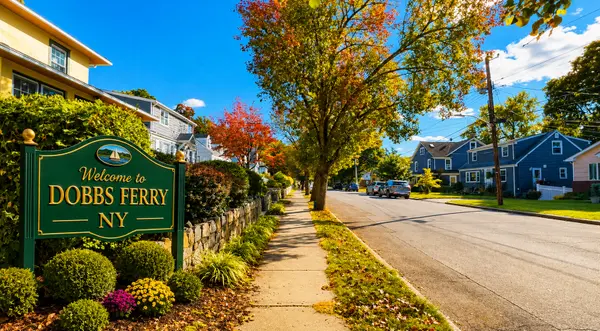
Maybe your budget gives you several options in White Plains but very few properties matching your criteria in Scarsdale. Maybe you're comparing Tarrytown and Dobbs Ferry. Maybe changing the property type from a single-family home to a condo substantially changes what you're seeing. Or maybe the numbers tell us that we should expand the search geographically rather than stretch the budget.
That's where financing and the actual Westchester housing market need to meet.
How I Would Approach This Before You Start Touring Homes
I recently worked with a buyer relocating to Westchester from California. His work would take him to both New York City and Westchester, so we didn't start by forcing the search into one town.
We looked across different parts of the county and compared actual properties and locations. As he learned the market, we narrowed the search based on what worked for what he was trying to accomplish. He ultimately purchased a home in Hawthorne.
The same process applies to budget. You don't need to decide what you "should" spend because of a generic Westchester income chart. Establish the financing parameters with your lender, decide what monthly expense you're personally comfortable with, and then look at what those numbers actually buy across Westchester.
Once you have those numbers, we can build the actual home search around them.
Frequently Asked Questions
Can I buy a home in Westchester County with a $150,000 household income?
Potentially. Income by itself isn't enough information to answer the question. Your down payment, existing debt, interest rate, credit and financial profile, property taxes, insurance, property type and loan program can all affect qualification and affordability. A lender can determine what you qualify to borrow, and from there I can help you understand what that budget is actually buying in the Westchester market.
How much income do I need to buy a $1 million home in Westchester?
There isn't one responsible income number that applies to every buyer. Putting 20% down on a $1 million property would leave an $800,000 mortgage before considering the property's taxes, insurance and the borrower's other debts and financial circumstances — those variables need to be evaluated before estimating the qualifying income.
Does putting more money down reduce the income I need?
A larger down payment reduces the amount being financed and therefore can reduce the mortgage's principal-and-interest payment. It may also affect loan-to-value and mortgage-insurance requirements. Whether that changes your qualification enough for a particular purchase depends on the complete loan scenario.
What is debt-to-income ratio and why does it matter for a Westchester purchase?
Debt-to-income ratio, or DTI, compares your total monthly debt payments — including the proposed mortgage — to your gross monthly income. Per Fannie Mae's Selling Guide, the maximum total DTI for manually underwritten loans is generally 36%, which can increase to 45% when specific credit score and reserve requirements are met. For loan casefiles underwritten through Desktop Underwriter, the maximum allowable DTI is 50%. A licensed lender can confirm which guidelines apply to your particular loan.
How much should I spend if I'm approved for more than I want to pay?
You don't have to spend your maximum approval. Your lender can tell you what you're qualified to borrow. Your personal budget should determine what you're comfortable carrying after considering your other expenses, savings and financial priorities.
Why do Westchester property taxes matter when determining affordability?
Property taxes are part of the overall cost of owning the home and may be included in the monthly mortgage payment through escrow. Two similarly priced properties can therefore have different total monthly housing costs if their property taxes differ.
Should I get pre-approved before looking at homes in Westchester?
Getting financing organized early can help establish a realistic purchase range before you spend time touring properties. But I'd go one step further: once you know your financing range, compare it with what is actually available in the Westchester communities you're considering.
Who can help me figure out what my budget buys in different Westchester towns?
I'm John Buoninfante, a Licensed Associate Real Estate Broker with Real Broker NY LLC. A mortgage professional should determine your financing and qualification — my role is different. I can help you take that budget and compare actual properties, taxes, housing types and locations across Westchester so you can decide where it makes sense to focus your search. If you're still early in the process, start with my Moving to Westchester Guide. If you already know approximately what you want to spend and you're trying to figure out where that puts you in Westchester, contact me at 646-391-1093 or John@JohnWestchesterRealtor.com and tell me your approximate budget, where you need to commute and the type of property you're looking for.
Sources: Fannie Mae Selling Guide, Section B3-6-02 (Debt-to-Income Ratios); Consumer Financial Protection Bureau homebuyer affordability guidance; New York State Tax and Finance, Reassessments. Underwriting limits and eligibility requirements are set independently by each loan program and can change — confirm current guidelines with a licensed mortgage professional.
Categories
Recent Posts