Westchester to NYC Commute: Comparing Metro-North Towns in 2026

If you're looking for the "best Westchester towns for NYC commuters," train time is probably one of the first things you're comparing.
It's important, but it isn't the whole commute.
Two properties can be served by the same Metro-North station and still create very different daily routines. One may be within walking distance. Another may require driving and parking. And once you reach Grand Central, you may still have another part of the trip ahead of you.
I'm John Buoninfante, a Licensed Associate Real Estate Broker with Real Broker NY LLC, and I move people in and out of Westchester.
Here is a practical way to compare a Westchester home search when commuting to New York City is an important part of the decision.
Start With the Metro-North Lines Serving Westchester
Metro-North connects communities throughout Westchester County with Grand Central Terminal.
Three main lines serve the county:
- Harlem Line: communities include Bronxville, Scarsdale, White Plains, Pleasantville and Chappaqua.
- Hudson Line: communities include Yonkers, Hastings-on-Hudson, Dobbs Ferry, Irvington, Tarrytown, Ossining and Croton-on-Hudson.
- New Haven Line: communities include Pelham, New Rochelle, Larchmont, Mamaroneck, Harrison and Rye.
That gives you a starting point, but a town name or rail line isn't enough to tell you what your commute will actually look like.
Scarsdale and White Plains: Harlem Line Examples
Scarsdale and White Plains are both served by Metro-North's Harlem Line.
MTA Metro-North schedules accessed in September 2026 showed certain express trips from both stations reaching Grand Central in roughly the mid-30-minute range.
That doesn't mean every train takes the same amount of time. Travel time depends on the departure, service pattern, day and current schedule.
It also doesn't mean a property in either municipality automatically gives you a mid-30-minute commute. You still need to account for the trip from the property to the station, parking or walking time, waiting time and whatever travel remains after Grand Central.
For an actual home search, check the current MTA Metro-North schedule for the departures you'd realistically use.
Source: MTA Metro-North Railroad schedules, accessed September 2026. Train times and service patterns are subject to change.
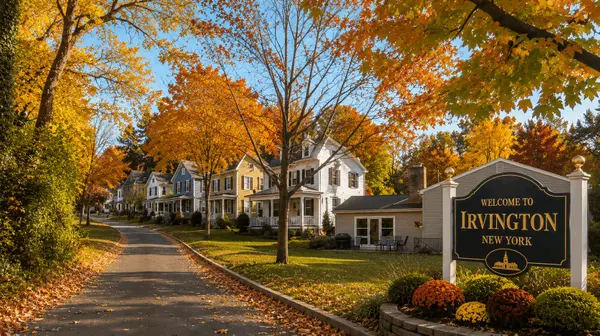
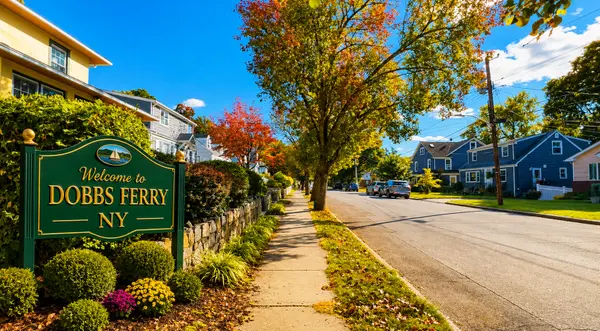
Tarrytown, Irvington and Dobbs Ferry: Hudson Line Examples
Tarrytown, Irvington and Dobbs Ferry are served by Metro-North's Hudson Line.
MTA schedules accessed in September 2026 showed certain Tarrytown express trips reaching Grand Central in the upper 30-minute range.
The information currently available here does not establish comparable scheduled travel times for Irvington and Dobbs Ferry, so assigning an estimated number wouldn't provide a sound comparison.
The same property-level questions still matter in all three places: How will you get to the station? If you're driving, what parking arrangement would you need? How does the departure you would actually take fit your work schedule? What happens after you reach Grand Central? Those questions tell you more about the real commute than a general description of a town as "commuter-friendly."
Source: MTA Metro-North Railroad schedules, accessed September 2026. Train times and service patterns are subject to change.
What About the New Haven Line?
Metro-North's New Haven Line serves Westchester communities including Pelham, New Rochelle, Larchmont, Mamaroneck, Harrison and Rye.
The information currently available for this article does not establish verified representative 2026 travel times from those stations. Rather than assigning estimated commute times, compare current MTA schedules for the specific stations and departures relevant to your search.
A Westchester commute comparison can include multiple rail lines rather than being limited to the stations for which this article currently has representative travel-time examples.
The Train Ride Is Only One Part of the Commute
A scheduled 35-minute train ride and a 35-minute door-to-door commute are not the same thing.
For each property you're considering, look at the complete trip:
- Property to station
- Walking, driving or drop-off time
- Parking, if needed
- The train departure you would actually use
- Scheduled train time
- Arrival at Grand Central
- Travel from Grand Central to your final destination
A property with a slightly longer scheduled train ride could still create a different overall commute from a property that requires more time getting to the station. That's why the scheduled train time should be considered as one part of the complete trip rather than the entire comparison.
Station Parking Can Change the Comparison
If you plan to drive to Metro-North, parking becomes part of the commute.
Before assuming you'll be able to park at a particular station, check the applicable official parking authority for permit eligibility, cost, availability and other parking options.
Until you know how you're actually getting from the property to the train, you don't know the complete commuting routine.
Distance to the Station Is a Property Question
A town may have a Metro-North station without every property being close to it.
White Plains is a useful example. A downtown apartment or condo and a single-family home elsewhere in the city can have very different relationships to the White Plains station even though both properties have a White Plains address. The same principle applies elsewhere: if walking to the train matters to you, measure the distance from the actual property, and if you're driving, understand the route and parking arrangement you'd use.
Housing Cost Still Matters in a Commute Search
A faster or simpler commute doesn't tell you whether a particular property works financially.
According to OneKey MLS, the median sale price for a single-family home in Westchester County was $1,060,000 for the 12 months through August 2026, up 9.3% from $970,000 during the previous comparable period. That's countywide context, not a price estimate for any of the communities discussed here.
Once you've narrowed your search, compare current inventory and recent comparable sales in the specific community, property type and price range you're considering.
Source: OneKey MLS Local Market Update, Westchester County Single-Family Homes, August 2026.
Don't Leave Property Taxes Out of the Commute Decision
Two homes with similar purchase prices can have different property-tax bills.
For a specific property, review the available tax information, assessment, applicable taxing jurisdictions and exemptions rather than assuming the asking price or municipality tells you what the tax bill will be.
When a buyer is seriously considering a property, I can investigate the available tax information and, when clarification is needed, contact the appropriate municipal assessor's office directly. That doesn't guarantee what a future tax bill will be, but it gives us better property-specific information to work with than an assumption.
A commute comparison becomes much more useful when you're looking at the complete property decision: purchase price, taxes, property condition, transportation and the actual trip you'll make regularly.
How Should You Compare Westchester Communities for an NYC Commute?
Don't start by asking which town is universally "best." Start with the actual trip and the actual properties.
For each property you're seriously considering, compare:
- The Metro-North station you'd use
- The current departures that fit your schedule
- Scheduled travel time to Grand Central
- How you'll get from the property to the station
- Parking requirements, if applicable
- Your trip after Grand Central
- Current housing options within your budget
- Property-specific taxes and other ownership costs
That gives you an objective framework for comparing Westchester locations without relying on a generic ranking.
Frequently Asked Questions About Commuting From Westchester to NYC
How should I compare Westchester commute times to Manhattan?
Compare the actual Metro-North departures you would use and then add the rest of your door-to-door trip. Scheduled train time alone doesn't include getting from the property to the station, parking or walking, waiting for the train, or traveling from Grand Central to your final destination.
How long is the Metro-North ride from Scarsdale to Grand Central?
MTA Metro-North schedules accessed in September 2026 showed certain Scarsdale express trips reaching Grand Central in roughly the mid-30-minute range. Other departures can take longer, so check the current MTA Metro-North schedule for the trains you'd realistically use.
How long is the Metro-North ride from White Plains to Grand Central?
MTA Metro-North schedules accessed in September 2026 showed certain White Plains express trips reaching Grand Central in roughly the mid-30-minute range. Travel time varies by departure and service pattern, so use the current MTA Metro-North schedule when comparing a specific commute.
How long is the Metro-North ride from Tarrytown to Grand Central?
MTA Metro-North schedules accessed in September 2026 showed certain Tarrytown express trips reaching Grand Central in the upper 30-minute range. Other departures can differ, so verify the current Metro-North schedule for the trips you'd use.
Does living near a Metro-North station mean I can walk to the train?
No. A municipality can have a Metro-North station without every property being within practical walking distance. Evaluate the distance and route from the specific property you're considering.
What should I check if I plan to drive to Metro-North?
Check the official parking rules for the station you'd use, including permit eligibility, cost, availability and other parking options. Parking arrangements can affect both the cost and time involved in the commute.
What should I do once I've narrowed my Westchester commute search?
Compare actual properties rather than town names. Look at the current Metro-North schedule, property-to-station trip, parking if needed, travel after Grand Central, current housing options, property taxes and other ownership costs for the homes you're seriously considering.
Comparing a Westchester Move and an NYC Commute?
If you're still learning the county, my Moving to Westchester County Guide is an available next step for broader relocation research.
If you're further along, I can help you compare current properties, OneKey MLS market information, property taxes, Metro-North schedules and the property-to-station considerations that affect the commute.
I'm John Buoninfante, a Licensed Associate Real Estate Broker with Real Broker NY LLC.
I move people in and out of Westchester. My job isn't to choose the "best commuter town" for you. It's to help you understand the property and commuting information behind the choices you're considering so you can make that decision yourself.
Moving to Westchester County Guide:
Download the Moving to Westchester County Guide
Market information reflects OneKey MLS data through August 2026 and is subject to change. Transportation information reflects MTA Metro-North schedules accessed in September 2026; schedules and service patterns can change. Property-tax and parking information should be confirmed for the specific property and station being considered. This article is for informational purposes and does not constitute financial, tax or legal advice.
Categories
Recent Posts